• 演出
    走近神韵
    神韵九大特点
    中国古典舞
    神韵交响乐团
  • 艺术团
    我们的故事
    在神韵生活
    神韵不为人知的故事
    我们面临的挑战
    概况介绍
  • 艺术家
  • 视频
  • 新闻
    最新消息
    新闻
    博客
    媒体报导
  • 观众反馈
  • 常见问题
  • 媒体 新闻通讯 神韵百科 联系我们 搜索
    中文简体
  • English
  • 中文正體
  • 日本語
  • 한국어
  • Česky
  • Deutsch
  • Español
  • Français
  • Indonesia
  • Italiano
  • Nederlands
  • Polski
  • Português
  • Latviski
  • Pусский
  • Română
  • Svenska
  • Việt
  • Melayu
  • עברית
  • Norsk
  • 订票信息
    选单
    Shen Yun Logo
    订票
    最新消息
    选单
    • 演出
      • 走近神韵 神韵九大特点 中国古典舞 神韵交响乐团
    • 艺术团
      • 我们的故事 在神韵生活 神韵不为人知的故事 我们面临的挑战 概况介绍
    • 艺术家
    • 视频
    • 新闻
      • 最新消息 新闻 博客 媒体报导
    • 观众反馈
    • 常见问题
    Shen Yun 9 Characteristics Link Image

    神韵的高超之处?

    9大特点
    • 媒体
    • 新闻通讯
    • 神韵百科
    • 联系我们
    • 搜索
    语言
    • English
    • 中文正體
    • 日本語
    • 한국어
    • Česky
    • Deutsch
    • Español
    • Français
    • Indonesia
    • Italiano
    • Nederlands
    • Polski
    • Português
    • Latviski
    • Pусский
    • Română
    • Svenska
    • Việt
    • Melayu
    • עברית
    • Norsk
      新闻
      上一页 新闻 > What Motivates Shen Yun's Artists?
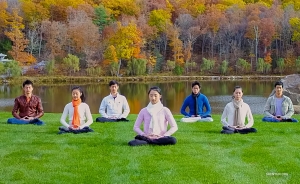
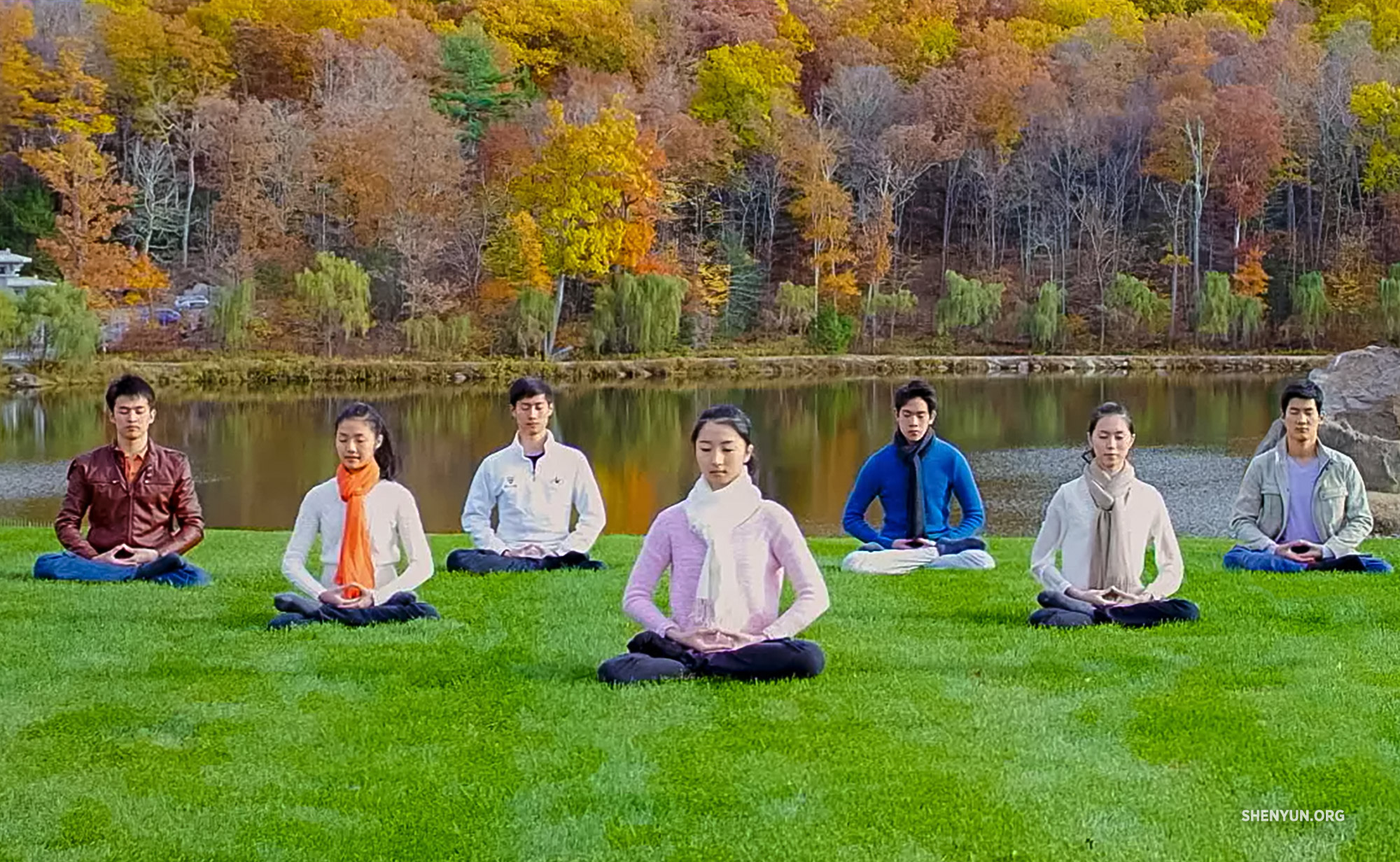
    Dancers meditating by the lake at Shen Yun's headquarters in Dragon Springs, NY.

    What Motivates Shen Yun's Artists?

    The dedication required for what these performers do isn’t for everyone. Here’s why they chose this path.

    From the audience seats, looking up at the dancers onstage and listening to the music from the orchestra, the Shen Yun performers’ artistic excellence is undeniable, even awe-inspiring. But while they possess certain inborn talents of physicality and even temperament, to achieve this level of mastery they had to put in countless hours of training and make sacrifices big and small.

    It’s not an easy life. They wake up early to train. They push their bodies to remarkable heights and their minds to depths of concentration. Like professional athletes or touring musicians, they spend months on the road, away from loved ones, in unfamiliar cities, constantly in and out of theaters, airports, and hotels. When tour is finally finished, they take a well-deserved vacation—typically traveling again, and then get ready to do it all over, preparing a new production from scratch.

    Why Do They Do This?

    The answer comes down to three forces: a shared faith, the urgency of persecution in China, and pursuit of elite artistry.

    “Our headquarters in New York is like a combination of Juilliard and a Catholic School,” says Shen Yun Conductor and Vice President Ying Chen, who was born in China. “On the one hand, it’s a place where top artists perfect their craft and work together in a tight-knit community to elevate their game. At the same time, it’s a place guided by religious beliefs and a moral compass.”

    Principal Dancer Piotr Huang, originally from Poland, began his training as a teenager—first as a high school student at Fei Tian Academy of the Arts, and then at Fei Tian College, both schools that share the grounds and training facilities with Shen Yun in New York. He is now one of the company’s veteran performers and longtime stars.

    “What we do and why we do it makes a lot of sense if you share our faith and sense of purpose, but that’s not for everyone, I get it. Not everyone wants to meditate every day, talk about where they can improve morally, or study scriptures,” he says.

    “And not everyone wants the life of a professional dancer. It takes a lot of hard work and dedication, every day, for years,” says Huang. “For me, I find it deeply fulfilling and I wouldn’t trade it for anything.”

    But First, We Meditate

    If you were to sneak backstage about 15 minutes before a performance, you would find not the commotion of dancers jumping around fist bumping. Instead, you would see them, in costume, sitting on stage, eyes closed, hands conjoined, meditating. You could hear a pin drop.

    A shared faith is the core identity of Shen Yun. It’s in the company’s DNA, is what guides its culture, its code of ethics, and the rhythms of daily life.

    Shen Yun was established in New York’s Hudson Valley by practitioners of Falun Dafa. It was 2006, and the persecution of Falun Dafa practitioners in China—still ongoing today—was in some of its darkest hours.

    Falun Dafa (a.k.a. Falun Gong), is a Buddhist-based discipline rooted in ancient Chinese spirituality. It involves gentle meditative exercises and the core tenets of Truthfulness, Compassion, and Forbearance. It had become so popular in China during the 1990s that the government there estimated as many as 100 million Chinese practiced it.

    That was too many for the ruling Chinese Communist Party, which banned the practice and launched a violent persecution campaign involving propaganda, mass arrests, labor camps, torture, and murder of peaceful people.

    Outside of China, practitioners of Falun Dafa were using their skills to call world attention to the persecution. Among them were top artists, including ones who escaped persecution, and they wanted to use their skills to give voice to those suffering in China. They created Shen Yun.

    From Ancient Beauty to Modern Reality

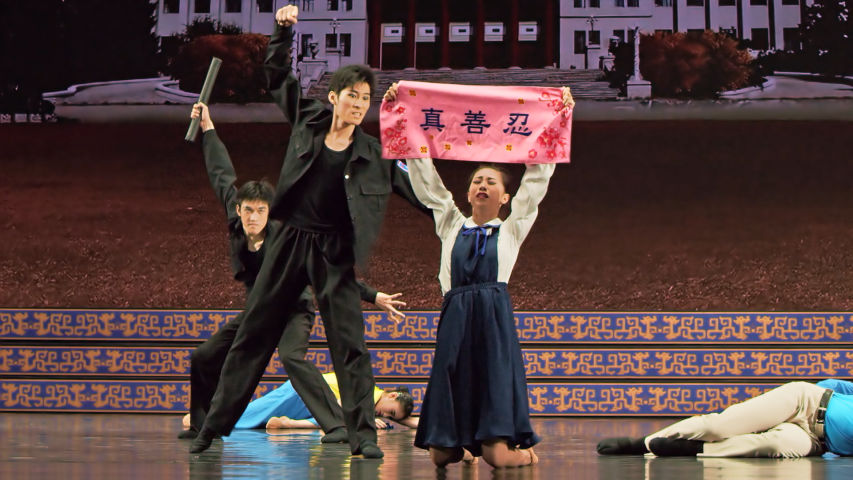
    From the very beginning, Shen Yun’s mission was to revive traditional Chinese culture—to show “China before communism,” as the billboards say. Each performance includes about 15 dance pieces with stories and legends, historical heroes, literary characters, and different dynastic and ethnic traditions. Alongside these, every show also features a couple of dances about Falun Dafa, depicting the tyranny in China today and the courageous resistance to it—all through beautiful art.

    “Ever since I was a child growing up in Taiwan, I wanted to do something to stop the persecution in China,” says Shen Yun Principal Dancer Michelle Lian. “When I saw Shen Yun perform in Taipei the first time, I knew that this is what I wanted to do—to dance and tell people about the persecution on stage. Being in Shen Yun became my dream.”

    The urgency of stopping the atrocities—literally the burden of people dying—has driven much of the effort that has gone into building Shen Yun.

    Like many startups with strong leadership and a team united by a dream, Shen Yun was built by people who left other careers to join the mission, worked long hours, and often began as volunteers. Without government backing or large corporate sponsors, the company grew from one to eight equally large performance troupes that tour the world simultaneously.

    “I actually didn’t know almost anything about Falun Gong when I auditioned for a job with the Shen Yun orchestra,” says bassoonist Gabriela Gonzalez-Briceno from Venezuela. “I just found a bunch of kindhearted people who were so sincere, and quickly I picked up the practice as well. Now it’s part of who I am.”

    The Sacred in Daily Life

    A typical day at Shen Yun will involve not only dance classes, tumbling practice, orchestra sectionals, and rehearsals, but also group study of Falun Dafa’s teachings and group meditation sessions.

    Beyond daily actions, though, the faith is as much about a change of perspective.

    A key principle of practicing Falun Dafa is the idea of “looking inward.” This is similar to the concept of “extreme ownership,” a term coined by Navy SEAL Jocko Willink, which involves taking personal responsibility for everything in your life. In Falun Dafa’s spiritual terms, it is about searching within yourself to see where you fall short and where you can improve whenever facing a challenge or conflict, even ones that don’t directly involve you.

    “Because we all try to follow the principles of Truthfulness, Compassion, and Forbearance, and to look inside when we have a problem, it actually makes our life very harmonious,” says percussionist Alice Liu from London. “It’s not that we don’t have conflicts, of course we do. And it’s not that we’re perfect—we’re not. It’s that the teachings give us a mechanism and a culture for how to handle conflicts and learn from the process.”

    “I came here to Shen Yun because I wanted to be with other young people who shared the same faith as me,” says dancer Hubert Qu from Los Angeles. “I actually deepened my faith and spiritual practice here, together with my friends who are like brothers to me.”

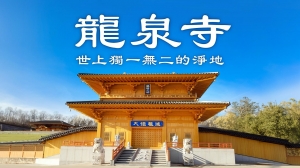
    A unique feature of life on Shen Yun’s campus, called Dragon Springs, is that it is also home to a breathtaking Tang Dynasty-style Buddhist temple like no other, certainly outside Asia. Performers can go for afternoon strolls in the serene temple grounds, making an instant connection to both their spirituality and the ancient civilization they portray on stage.

    “I definitely know some people who felt this lifestyle wasn’t for them,” says Qu. “It felt to them like being monks and they didn’t want that, so they decided to leave. I was sad to see them go, but that’s their choice and I respect that.” “I guess everyone’s different, because one of the things I’m most grateful for with Shen Yun is that it helped me grow spiritually,” he says.

    Elite Artistry

    But now take a spiritual seeker and image him in a tumbling gym practicing a flip over and over again, landing in a foam pit. Or perhaps she’s a violinist spending four hours a day in a soundproof booth practicing Sarasate’s Zigeunerweisen.

    Alongside spirituality, the company culture of Shen Yun is also one of striving for world-class artistic mastery.

    “Artistic achievement is boundless, there’s always a higher realm to reach,” says Principal Dancer Roy Chen from Taiwan. “There’s a Chinese expression: behind a minute onstage is a decade of training offstage. It takes a lot of hard work to make it look easy.”

    The concept is similar to Malcolm Gladwell’s idea that it takes 10,000 hours of deliberate practice to achieve mastery in any domain. It’s also similar to Cal Newport’s ideas that deep professional fulfilment comes from achieving mastery in ones chosen field, and that this is earned through applying yourself consistently, long-term, in a focused way.

    “We strive for perfection in every show, in every aspect of every show,” says Concertmaster Nika Zhang from Pittsburgh. “What really motivates us is that we want the audience to be fully absorbed in the world of the performance, and for that you need everything to be just right—and at the highest level.”

    “Even though audience members regularly describe the show as perfect, you’d be surprised, we have a debrief after every show, and we always find areas we can improve,” she says.

    Be it the orchestra playing in harmony or dancers moving perfectly in synch, it requires not only a team effort and chemistry, but also letting go of ego and supporting each other. This is where having a shared faith makes it a lot easier, as the purpose is greater than the self.

    “I try not to focus on myself but on the team, doing well all of us, together,” says Principal Dancer Nara Oose from Japan. “When I first joined Shen Yun, the veteran dancers took me under their wings and sometimes literally held my hand. Even when we go to competitions, we’re constantly cheering each other on and giving each other feedback.”

    “The mindset isn’t about winning a certain place, but about growth and helping each other be the best they can be,” Oose says.

    The Mindset of an Athlete

    Classical Chinese dance—with its requirements for flexibility and its explosive flips and tumbling techniques—is so athletic that its physical demands are most comparable to sports like gymnastics. Shen Yun, and the Fei Tian schools where the performers receive their training, are like elite athletic programs, complete with state-of-the-art training facilities, coaches, video rooms, and medical care.


    “I grew up a basketball player and a huge fan of Kobe Bryant and tried to learn from his Mamba Mentality,” says dancer Huang. “Bryant famously played through injuries, and a lot of people admired him for that.”

    “I think as dancers, we might have that kind of mindset that we can tough it out and play a little hurt if we need to. But what we’ve learned is that it’s really not sustainable for a dance career where you have a 100 shows a year and you want to give the audience your best,” he says.

    Overcoming Injuries

    “A couple years ago my Achilles started hurting and I wanted to keep going,” Huang says. “But it was actually my manager who told me to look at my career as a marathon not a sprint. She made me rest and recover, and I’m very thankful she did.”

    Dancers like Sam Pu have talked about having surgery, rehab, and return to the company. Principal dancers like Aaron Huyhn, Chad Chen, and Shawn Ren have also undergone the operation.

    “We have hundreds and hundreds of dancers who take the stage every year,” says Principal Dancer Jesse Browde, who grew up in New York. “It’s just like playing a professional sport. You do your best to prevent injuries, but it's going to happen from time to time. I've had minor injuries over the course of the past seven years, and I've recovered from them and kept going.”

    Challenging moments may come not just from injuries, but also jetlag, snoring roommates, or just having the same Groundhog Day-like routine day after day. It takes a special kind of person to take on this lifestyle. Those who choose it, love it and stay—in spite of the difficulties.

    ‘How We Live’

    “The dancers to my left and right are like sisters to me, they really are,” says Shindy Cai from Sacramento. “I grew up an only child, but here I found a huge family.”

    “It’s more than that, though. We have a common mission of reviving traditional culture and so it’s not just something that we do, it’s how we live,” Cai says.

    When audience members are moved by the dancers’ portrayal of heroes known for their loyalty, courage, or faith, it’s not only because of the artistry—it’s also because these are the values that the artists have internalized, it’s who they are. In a sense, they are not really acting.

    “Our company is a faith-based organization, and I think our art is better for it,” says projectionist Regina Dong, who was born in China, then moved to Singapore and eventually the United States. “Our spirituality inspires us, we put that in our hearts, and then we try to inspire the audience.”

    “We’re actually not trying to convert anyone to our beliefs. What we really want to do is stop the persecution in China, bring people hope, and share something that is truly good and uplifting.”

    评论
    verification

    上一页

    Stories From the Artists
    最近
    • 艺术家聚焦:连旭
      MichelleLian Header Cn 2000w
    • 月明照寰宇 神韵庆中秋
      Moon Festival Painting
    • 神韵艺术家参加游行制止迫害
      THUMB EpochImages 1224016146 SYJoinsDafaParade
    • 7.20:当迫害痛彻心扉
      720 Header Cn 650x400ratio
    • 林肯中心观众称神韵「纯粹的完美」
      Frank Dellapolla 650x400
    • 观众反馈—美国纽约、新泽西
      NY Audience Feedback 2024
    • 圆满落幕:一次创纪录的巡回演出
      SY Venue 1631x971
    • 知难而上,从不为人知到世界瞩目
      1 25 Parma NEWEDIT
    • 观众反馈-西班牙、波兰
      SY Reviews Spain Polan 650x400
    • 2024巡回演出图片集锦二
      DSC01294 2000x1336
    最多点击
    • 全部
    • 新闻
    • 博客
  • 1 艺术家聚焦:连旭
  • 2 划时代全球巡演开启 神韵艺术团庆祝成立二十周年
  • 显示更多
  • 1 艺术家聚焦:连旭
  • 显示更多
    显示更多
    Shen Yun logo golden

    神韵艺术团是全球顶级中国古典舞与传统音乐艺术团。神韵艺术团成立于纽约,通过中国古典舞、民族民间舞、舞剧、交响乐伴奏、乐器独奏和美声独唱,复兴与弘扬中国五千年正统神传文化。

    关于神韵
  • 走近神韵
  • 神韵交响乐团
  • 在神韵生活
  • 关于神韵的基本事实
  • 我们面临的挑战
  • 藝術與靈性的啟迪
  • 艺术家
  • 观赏礼仪
  • 视频
  • 最新
  • 关于我们
  • 艺术家
  • 观众反馈
  • 媒体报导
  • 新闻
  • 最新消息
  • 新闻
  • 博客
  • 媒体报导
  • 神韵百科
  • 神韵舞蹈
  • 神韵音乐
  • 神韵声乐
  • 神韵服饰
  • 神韵天幕
  • 神韵道具
  • 神韵舞剧
  • 神韵与中国传统文化
  • 与神韵互动:
    在乾净世界平台追踪我们的频道
    请留言以作纪念
    神韵作品
    神韵的线上影音平台
    艺术考级中心
    神韵艺术品
    神韵艺术家
    神韵艺术团官方网站 ©2026 神韵艺术团,版权所有。
    联系我们 使用条款 隐私政策 网站地图